8 Player Profiles That Defined the 1992 NHL Draft
A deep dive into the 1992 NHL Draft. Explore 8 key player profiles, draft steals, and busts to sharpen your hockey trivia and NHLdle skills.
Let's drop the puck on a monumental moment in hockey history: the 1992 NHL Entry Draft. This wasn't just another draft day; it was a crossroads where old-school scouting met a wave of European talent and new player archetypes. For any fan looking to crush their daily NHLdle guesses or just sharpen their hockey trivia, the 1992 draft is essential homework. It’s a goldmine of patterns, player profiles, and hidden gems from the early nineties.
We're going beyond a simple list of top picks. We'll break down the careers of the top-10 selections, celebrating the hits and figuring out what went wrong with the misses. More importantly, we'll dissect the biggest steals and busts from every round, offering insights into what made them succeed or falter. Get ready to uncover the late-round legends who defied all expectations.
We’ll also look at the draft-day trades that shook up rosters and analyze the stats that tell the real story of the draft’s impact. This isn't just a history lesson; it's a strategic guide. Understanding the player profiles GMs wanted in 1992—from towering defensemen to skilled European snipers—gives you a blueprint for making smarter guesses in any hockey trivia challenge.
1. Chris Pronger - Defenseman (2nd Overall Pick)
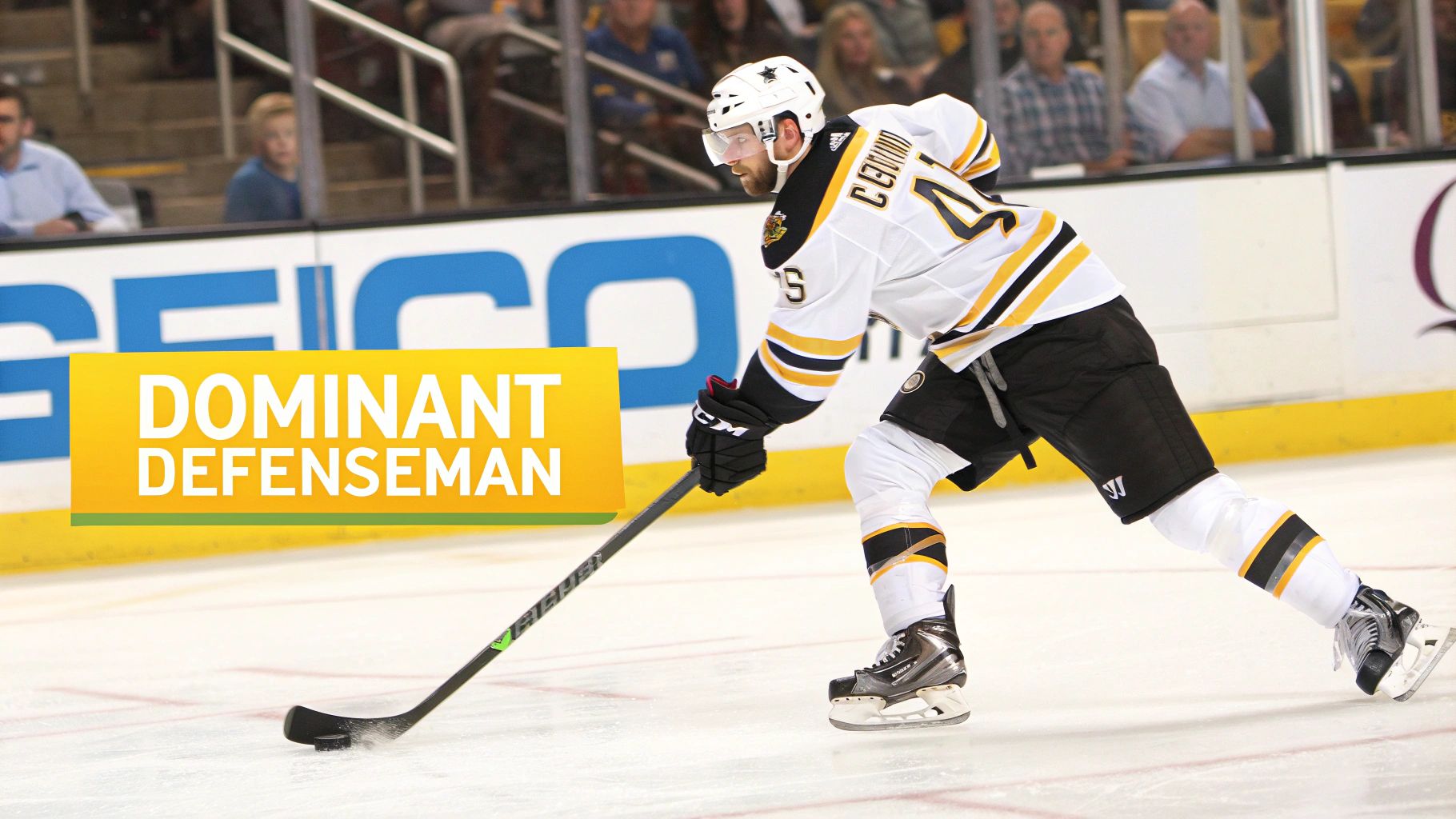
While Roman Hamrlik went first overall in the 1992 NHL Draft, it's impossible to talk about the era's defensive talent without starting with Chris Pronger. Drafted second by the Hartford Whalers, Pronger became the gold standard for what every GM wanted in a top-pairing blueliner. He was the complete package: a monstrous 6'6" frame combined with the smooth skating and hockey sense of a much smaller player.
Pronger was the archetypal dominant, two-way defenseman of his generation. He could control a game with punishing physicality, quarterback a power play with a booming shot, and log huge minutes against the other team's best forwards. His path to stardom wasn't immediate, but once he hit his stride, he became one of the most feared and respected players in the league. His career is a masterclass in using size, skill, and pure grit to impact every shift.
Why He Defines the Era
Pronger's trophy case tells the whole story. He's one of only two defensemen since Bobby Orr to win the Hart Memorial Trophy as league MVP (1999-2000), a season where he also nabbed the Norris. He hoisted the Stanley Cup with the Ducks in 2007 and dragged two other teams, the Oilers (2006) and Flyers (2010), on improbable runs to the Final.
Actionable Tips for Your Game
Pronger's career offers some great clues for identifying defensive prospects from drafts like the 1992 NHL Draft:
- Elite Skating in Big Bodies: A defenseman's size is a weapon, but mobility unlocks it. Pronger's smooth stride allowed him to control gaps and jump into the rush. If you see a big D-man who can really move, that's a huge tell.
- High Hockey IQ: Look beyond the physical tools. Pronger's ability to read plays and make the right decision under pressure set him apart. That's a trait of a true top-pairing guy.
- Patience is Key: Not every high pick dominates from day one. Pronger's trade from Hartford to St. Louis was the turning point that let him develop into a superstar. Sometimes a player just needs a change of scenery.
For a deeper look at the draft class that followed, check out our analysis of the 1993 NHL Draft and the rise of another legendary blueliner.
2. The High-Ceiling European Prospect Profile
The 1992 NHL Draft was a turning point. GMs started putting way more emphasis on high-ceiling European talent. Players like Jari Kurri and Mats Sundin had already proven Europeans could dominate, but the recent arrival of superstars like Jaromir Jagr and Nicklas Lidstrom kicked the door wide open. Scouts began to see the massive, untapped potential in the skilled leagues of Sweden, Finland, and Czechoslovakia.
This shift was all about projecting future impact over North American-style readiness. Teams fell in love with the slick hands, fluid skating, and creativity that were hallmarks of the European game. They understood these guys might need a year or two to adjust to the smaller ice and more physical style, but their upside was franchise-altering. The 1992 draft was full of teams hunting for the next European sensation.
Why It Defines the Era
This is when the NHL truly went global with its scouting. The success of players drafted just before '92, like Jagr, Lidstrom, and Teemu Selanne, was undeniable proof. The 1992 NHL Draft saw a record number of Europeans taken in the first round, a trend that only grew. Teams realized that to build a contender, they had to cast a wider net. This permanently changed how rosters were built, leading to more skill and excitement across the league.
Actionable Tips for Your Game
Evaluating European prospects from this period offers some solid clues for spotting future stars in any trivia game:
- Prioritize Skill and Hockey Sense: European players were often technically superior. Look for elite skating, puck skills, and an innate ability to read the play. Physicality can be added, but high-end skill is tough to teach.
- Factor in the Adjustment Period: Don't write off a European prospect after a quiet rookie season. It takes time to adapt to a new culture and the North American grind. Patience is a virtue.
- Watch International Tournaments: The World Juniors were (and still are) the best place to see how European prospects stack up against North Americans before the draft. A big performance on that stage is a great indicator.
To see how one modern team is building its future, check out this deep dive into the Winnipeg Jets prospects and their pipeline.
3. The Versatile Forward Archetype
While pure goal-scorers always get the headlines, the 1992 NHL Draft showed a growing appreciation for a different kind of player: the versatile, 200-foot forward. Teams started putting a premium on guys who could play in all three zones, handle multiple positions, and fill different roles depending on the situation. It was a shift away from one-trick ponies toward more complete hockey players.
This archetype was about more than just points; it was about impacting the game everywhere. These forwards were valued for their defensive responsibility, winning puck battles, and their ability to switch between center and wing. Players like Martin Straka (19th overall) and Michael Peca (40th overall) built legendary careers as elite defensive forwards who could also chip in offensively. GMs were clearly building rosters with an eye on structure and flexibility.
Why It Defines the Era
The focus on versatility in the 1992 NHL Draft was a preview of the modern game. As coaching strategies got more sophisticated in the '90s, having forwards who could execute a defensive system became a necessity. Players who could jump from a scoring line to a checking role were invaluable. This two-way forward became a foundational piece for contenders, able to shut down stars while still being an offensive threat. This draft cemented the idea that a forward's value wasn't just on the scoresheet.
Actionable Tips for Your Game
The rise of the versatile forward offers some great tips for evaluating prospects in your hockey games:
- Don't Overlook the 200-Foot Game: A player with elite defensive instincts can be as valuable as a pure sniper. Look for prospects who consistently make smart plays in their own end.
- Value Positional Flexibility: A natural center who can play the wing gives a coach incredible options. This adaptability is a huge advantage that often leads to more ice time.
- Scout the Intangibles: Work ethic, consistency, and a high hockey IQ are the hallmarks of a reliable two-way player. These traits often predict a player's ability to contribute even when they aren't scoring.
- Look for Defensive Impact: A forward who blocks shots and excels on the penalty kill provides hidden value that is critical for winning tight games.
4. The Undersized Scorer Profile
While the early '90s mantra was often "bigger is better," the 1992 NHL Draft also showed a cautious appreciation for the highly skilled, undersized forward. These players, usually between 5'10" and 6'0", were drafted on the promise that elite offensive instincts and blazing speed could beat a physical disadvantage. This profile challenged the old-school idea that only big guys could succeed in the NHL.
This archetype was defined by players who dominated with hockey sense, agility, and pure scoring talent. Think of the precedent set by guys like Pavel Bure, whose speed was a nightmare for defenders, or Steve Yzerman, who proved an elite force without being a "power forward." These players forced GMs to weigh game-breaking skill against traditional size, creating fun debates in draft rooms.
Why It Defines the Era
This player profile was crucial because it kept the focus on skill in an era full of clutching and grabbing. Teams that gambled on smaller, skilled players were often rewarded with dynamic offense and fan-favorite stars who could turn a game with a sick dangle or a top-cheese snipe. The success of these players ensured the draft would never be just a measurement of height and weight.
Actionable Tips for Your Game
Spotting smaller prospects from drafts like the 1992 NHL Draft requires looking for specific attributes that let them overcome their size:
- Skating and Hockey IQ Above All: Height is static, but a player's ability to skate and think the game is a dynamic weapon. Look for prospects whose smarts and mobility create space, regardless of their size.
- Check for Competitiveness: Smaller players who make it often have an insane will to win and can take a beating. Look for a history of competing in the dirty areas and bouncing back from hits.
- Don't Use Blanket Size Rules: Avoid rigid height or weight minimums. Judge each player on their skill set. A true goal-scorer can find the back of the net no matter how tall they are.
5. The Goaltender Development Prospect
The 1992 NHL Draft marked a big shift in how teams handled goalies. The era of just drafting the goalie with the best junior stats was ending. It was replaced by a more patient, projection-based model. Teams began to understand that goalies were unique assets who needed a 3-to-5-year development plan after the draft. This new philosophy prioritized raw athletic tools and mental toughness over gaudy stats in lower leagues.
This meant scouts started looking for different things. Instead of just a high save percentage, they focused on the details: a goalie's lateral quickness, their positioning, and how they controlled rebounds. The rise of unconventional talents like Dominik Hasek and the long development path of players like Kirk McLean reinforced the idea that finding a franchise goalie was a long-term investment.
Why It Defines the Era
This draft happened during a transition period for goaltending. The fire of Ron Hextall was a desirable trait, while European goalies introduced new techniques. Teams were creating dedicated goalie coach roles, realizing that mentorship was just as crucial as raw talent. The 1992 NHL Draft was a clear signal that plugging a junior phenom directly into an NHL crease was over; the focus was now on what a goalie could become with years of pro seasoning.
Actionable Tips for Your Game
Evaluating goalie prospects from this era requires a unique lens that balances current performance with future potential:
- Don't Overvalue Junior Save Percentages: A high save percentage can be the result of a great team defense. Instead, look at a goalie's athleticism, flexibility, and how they handle pressure.
- Plan for a 3-5 Year Timeline: Patience is everything with goalies. A goalie drafted in '92 was an investment for '96. Look for steady progress in the AHL or Europe.
- Assess Mental Fortitude: The ability to bounce back from a bad goal is what separates good goalies from great ones. Look for prospects with a calm demeanor and unwavering confidence.
This long-term approach to goalie development is a core part of modern scouting. For a look at how today's teams grow their future netminders, see this breakdown of the Leafs' top prospects.
6. The Injury Recovery/Second Chance Profile
The 1992 NHL Draft wasn't just about picking the consensus top guys; it was also about smart risk-taking. Smart GMs realized they could find immense value by targeting players whose draft stock had slipped due to major injuries or personal setbacks. This strategy involved looking past the red flags to see the underlying talent that others might have missed.
This "second chance" profile was a calculated gamble. A team willing to invest in a player with a complicated history could land a first-round talent in a later round. It required a deep understanding of not just their on-ice skills but also their character and resilience. The 1992 draft showed how a willingness to accept risk could uncover hidden gems who just needed the right environment to flourish.
Why It Defines the Era
In an era before advanced analytics, drafting a player with injury concerns was a massive leap of faith. The 1992 NHL Draft highlighted this perfectly. Teams relied on their scouts to dig deeper, assessing not just the injury but the player’s mental toughness to overcome it. Success stories from this draft helped prove that a setback in junior hockey wasn't a career death sentence. It showed that teams could get a competitive advantage by betting on talent and character, even when medical reports were shaky.
Actionable Tips for Your Game
Evaluating prospects who have faced adversity gives you a unique window into their potential, a lesson from the 1992 NHL Draft:
- Assess Mental Toughness: How did the player handle the setback? Look for a strong work ethic and a burning desire to return. This is often a better indicator of future success than a clean bill of health.
- Trust the Medical Staff: Don't just rely on junior team reports. A thorough medical evaluation is key. This helps separate manageable risks from career-threatening conditions.
- Evaluate the Support System: A player's recovery is influenced by their family and coaches. A strong support network makes a huge difference in a young athlete's ability to navigate a tough comeback.
7. The Physical, Defensive Defenseman Profile
The 1992 NHL Draft was deep in the clutch-and-grab era, and team-building reflected that. While skilled players were always valued, this draft showed the league's huge appetite for a specific archetype: the physical, shutdown defenseman. This wasn't about finding the next Paul Coffey; it was about drafting size, intimidation, and reliability. Teams wanted guys who could clear the crease, win board battles, and make opponents pay the price.
These were the warriors of the blue line, typically standing over 6'1" and weighing over 200 pounds. Their value wasn't on the scoresheet but in bruises delivered and shots blocked. Players like Brad Bombardir, who built a long career on a hard-nosed, defense-first mentality, perfectly embodied this profile. They were the backbone of penalty-killing units and the ideal guys to protect a late-game lead through sheer will.
Why It Defines the Era
This draft philosophy was a direct response to the on-ice product of the early '90s. With hooking and holding often ignored, having big, strong defensemen was a strategic necessity. This era valued defensive structure over wide-open hockey. The number of these defensive specialists in the 1992 NHL Draft showed a league-wide belief that championships were built from the net out, starting with guys who put preventing goals above all else.
Actionable Tips for Your Game
Looking at this player type offers a glimpse into a different era of hockey, with lessons that still have some relevance:
- Value Compete Level: A player's willingness to engage in physical battles is a tangible skill. These guys often have a high "compete level" that can elevate a team's defensive identity.
- Identify Specialized Roles: Not every player needs to be a point-producer. Recognize prospects who excel in specific roles, like shot-blocking or penalty killing.
- Look for Hidden Trade Value: Physical, defensive defensemen are often wanted by contenders at the trade deadline. A team with depth at this position could use them as valuable trade chips.
8. The Late-Round Gem/Hidden Value Profile
While the top of the 1992 NHL Draft had future stars, its true depth was revealed in the later rounds. This draft class became a masterclass in how savvy scouting departments could find impactful players long after the first-round spotlight faded. These were often guys overlooked for their size, the league they played in, or a lack of high-end offensive skill.
The philosophy behind finding these gems was rooted in projecting development and valuing intangibles. Teams willing to invest in international scouting or dig deep into smaller junior leagues were rewarded. It was about recognizing the raw materials: a relentless work ethic, a high hockey IQ, or a late growth spurt that others missed. This approach required patience and a commitment to player development.
Why It Defines the Era
The 1992 NHL Draft showed a shift towards a more global and comprehensive scouting approach. Teams realized talent wasn't just in the major Canadian junior leagues. Players like Valeri Bure (90th overall) and Jere Lehtinen (88th overall) were picked from European leagues and became legitimate NHL stars. Lehtinen, in particular, became the gold standard for a two-way forward, winning the Selke Trophy three times.
This era forced GMs to expand their horizons and trust their scouts. Finding a player like Andrei Nikolishin at 41st overall or Anson Carter at 220th overall proved that value could be found anywhere if a team was willing to do its homework.
Actionable Tips for Your Game
The success of the later rounds in the 1992 NHL Draft offers timeless lessons for finding hidden talent:
- Expand Your Scouting Map: Don't just focus on the CHL. Talent is global. Investing in scouts with connections in Russia, Finland, and Sweden can provide a huge advantage.
- Value Character and Competitiveness: Skills can be taught, but a player's internal drive is often innate. Look for players who compete hard in all three zones and show leadership qualities.
- Don't Dismiss Late Bloomers: Physical development isn't linear. A smaller, skilled player at 18 could become a dominant power forward by 22.
1992 NHL Draft: 8 Prospect Profiles Compared
| Profile | Implementation Complexity 🔄 | Resource Requirements ⚡ | Expected Outcomes ⭐ 📊 | Ideal Use Cases 💡 | Key Advantages ⭐ |
|---|---|---|---|---|---|
| Chris Pronger - Defenseman (2nd Overall Pick) | Moderate–High 🔄, long development & system fit | High ⚡, top draft capital, elite coaching & minutes | Elite two-way impact, long-term top-pairing ⭐ 📊 | Anchor blueline, power-play/PK leader for contender | Size + mobility, leadership, dominant two-way game ⭐ |
| High-Ceiling European Prospect Profile | Moderate 🔄, overseas evaluation & adjustment | Moderate ⚡, European scouting, translation & contract work | High upside technical skill, two-way play improvement ⭐ 📊 | Skill infusion, teams with Euro pipelines or patience | Superior fundamentals, maturity at draft, high floor ⭐ |
| Versatile Forward Archetype | Low–Moderate 🔄, positional coaching & role definition | Moderate ⚡, conditioning, tactical coaching | Reliable 200-foot contribution, depth scoring ⭐ 📊 | Depth building, playoff-ready rosters, cap flexibility | Positional flexibility, defensive value, durability ⭐ |
| Undersized Scorer Profile | Moderate 🔄, manage role, protect durability | Low–Moderate ⚡, skill coaching, speed development | High offensive upside, variable physical impact ⭐ 📊 | Need for creativity/speed, teams valuing skill over size | Elite speed, scoring instincts, often undervalued ⭐ |
| Goaltender Development Prospect | High 🔄, unpredictable 3–5 year development arc | High ⚡, specialized goalie coaching, patience & reps | Potential franchise-altering impact if successful ⭐ 📊 | Long-term rebuilds, orgs with goalie-development infrastructure | High-reward position, specialized skillset, mentoring upside ⭐ |
| Injury Recovery/Second Chance Profile | High 🔄, medical monitoring & phased reintegration | Moderate–High ⚡, medical staff, rehab programs, time | Variable — high reward if recovered, elevated risk of recurrence ⭐ 📊 | Value-driven picks, teams comfortable with medical risk | Cost-effective upside, motivated comeback potential ⭐ |
| Physical, Defensive Defenseman Profile | Low–Moderate 🔄, role-specific coaching | Moderate ⚡, strength conditioning, system fit | Reliable shutdown presence, limited offensive growth ⭐ 📊 | Penalty-kill specialists, playoff defensive systems | Physicality, consistency, effective in defensive systems ⭐ |
| Late-Round Gem / Hidden Value Profile | High 🔄, deep scouting, patience & development | Low–Moderate ⚡, broad scouting network, development time | High variance — occasional breakout stars, many misses ⭐ 📊 | Organizations investing in analytics & scouting depth | Cost-effective impact, organizational depth, surprise contributors ⭐ |
Putting It All Together for Your Next Guess
The 1992 NHL Draft was a masterclass in scouting and franchise building that still echoes through the league today. We've journeyed through a draft class that captured a pivotal moment in hockey—a time when the game was getting faster, more skilled, and more international. From a Hall of Famer like Chris Pronger to late-round heroes like Michael Peca, this draft had it all.
By breaking down the key player archetypes from this draft, you’ve unlocked a powerful new way to view NHL history. This isn't just about memorizing names; it's about understanding the story behind the picks. Why did teams take a chance on a skilled but unproven European? What made a gritty, two-way forward so valuable? Recognizing these patterns is what separates a good hockey trivia player from a great one.
Key Takeaways for Your Game
Think of the 1992 draft as your ultimate cheat sheet for hockey guessing games. When a mystery player from this era pops up, use these archetypes to make a killer guess:
- The Franchise Defender: Big frame and a point-per-game in junior? Instantly, names like Chris Pronger or Darius Kasparaitis should pop into your head.
- The European Skill Play: A high-scoring winger from a European league? That was the high-risk, high-reward gamble. Think Alexei Yashin or Robert Svehla.
- The Undersized Scorer: A smaller forward who put up huge numbers in the CHL? Ray Whitney is the perfect example. Teams were realizing elite skill could beat a lack of size.
- The Late-Round Grinder: Long career as a defensive forward or penalty killer? That's your Michael Peca profile. These guys were the engines of championship teams, often found late in the draft.
By internalizing these player profiles, you’re not just guessing. You’re making educated deductions based on the scouting trends of the era.
Pro Tip: Don't just focus on the top 10 picks. The real edge in trivia comes from knowing the later rounds. Being able to identify a player like Valeri Bure (33rd overall) or Jere Lehtinen (88th overall) based on their career is a game-changer. Those are the names that win you bragging rights.
Mastering the lessons from this iconic draft class elevates your hockey knowledge. It allows you to connect dots across different eras and understand how the league evolved. You can see the seeds of today's NHL in the choices made back in 1992. This deep understanding is your ticket to dominating your next hockey trivia night or crushing your daily NHLdle challenge.
Ready to put your newfound knowledge of the 1992 NHL Draft to the test? Head over to SportsDle and see if you can identify players from this iconic era and beyond in our daily hockey guessing games. Challenge your friends, track your stats, and prove you're the ultimate hockey guru at SportsDle