ID Any Hockey Player Silhouette
Dominate hockey trivia games by decoding any hockey player silhouette. Get insider tips to identify players from their stance, gear, and style.
Think a simple hockey player silhouette is just a black shape? Think again. For a true hockey fan, it’s a unique fingerprint, packed with hidden clues that can tell you everything about a player. Learning to spot these subtle details in stance, equipment, and form is the secret to crushing hockey guessing games like NHLdle. It’s all about training your eye to see beyond the outline and pinpoint the signature tells that give a player away.
Cracking the Code of the Silhouette
Ever been stumped by a shadowy figure in an NHL trivia game? We’ve all been there. At first glance, that black shape seems frustratingly generic, but it's loaded with info if you know where to look. This is where you graduate from making wild guesses to making smart, educated deductions.
Think of yourself as a detective. A silhouette gives you a whole framework of clues, from a player's unmistakable posture to the specific gear they rock on the ice. We're going to build a mental checklist that will turn you into a silhouette-solving machine.
The Art of Observation
The first trick is to stop seeing a generic hockey player and start hunting for unique identifiers. Is the player hunched over in that powerful, predatory stance, or are they more upright and fluid? What about their stick? Does it have a wicked curve for dangling, or is it flatter for picking corners?
These aren't random details; they're habits built over an entire career. They tell a story about a player's style, their position, and sometimes even the era they played in. To get a feel for this, it helps to view examples of sports figures with the background stripped away, which really makes their form pop.
Key Takeaway: The best trivia players don't just memorize stats; they recognize the little things that make each player unique. A silhouette is a visual puzzle, and every curve, angle, and piece of gear is a clue waiting to be solved.
Building Your Mental Database
Your goal is to build a mental library of player shapes and styles. As you see more silhouettes, you can cross-reference them with the players you know. Let's break down the most important tells to look for, giving you a clutch advantage when the pressure is on.
Mastering this skill comes down to focusing on a few key areas:
- Stance and Posture: How a player carries themselves on the ice is a huge giveaway.
- Equipment Choices: Look for unique helmets, visors, or even how they tape their stick.
- Body Type: You can often spot the difference between a towering d-man and a speedy, compact winger.
- Signature Moves: Is that a classic wind-up for a one-timer or a familiar celly?
By breaking down the silhouette into these core components, you can turn a fuzzy outline into a confident answer. It’s like adding a new deke to your trivia arsenal, ready to go when the game is on the line.
Key Silhouette Clues at a Glance
This is your quick reference guide for the biggest tells in a hockey player silhouette. Use these clues to instantly narrow down your choices in any hockey guessing game.
| Silhouette Feature | What to Look For | Potential Player Examples |
|---|---|---|
| Posture | Low, hunched-over stance vs. upright, smooth skater. | Sidney Crosby (low centre of gravity), Pavel Datsyuk (upright) |
| Helmet/Visor | Distinctive helmet models (e.g., the old Jofa), high/low visor placement. | Jaromir Jagr (classic helmet), Alex Ovechkin (mirrored visor) |
| Stick Curve | Is the blade curve massive or relatively flat? | Ryan Getzlaf (huge curve), Anze Kopitar (flatter "banana" curve) |
| Skating Stride | Long, powerful strides vs. short, choppy, agile steps. | Connor McDavid (explosive, wide stride), Mitch Marner (quick, edgy) |
| Shooting Motion | The "Ovi spot" one-timer wind-up, a quick snap shot release. | Alex Ovechkin (leg kick), Auston Matthews (drag-and-release) |
| Size & Build | Tall and lanky defenceman vs. a stocky, powerful forward. | Zdeno Chara (unmistakably tall), Brad Marchand (short, compact) |
Keep these features in mind, and you'll be surprised how quickly a seemingly anonymous silhouette reveals its identity. It’s all about knowing what to look for.
Reading Stances and Signature Shots
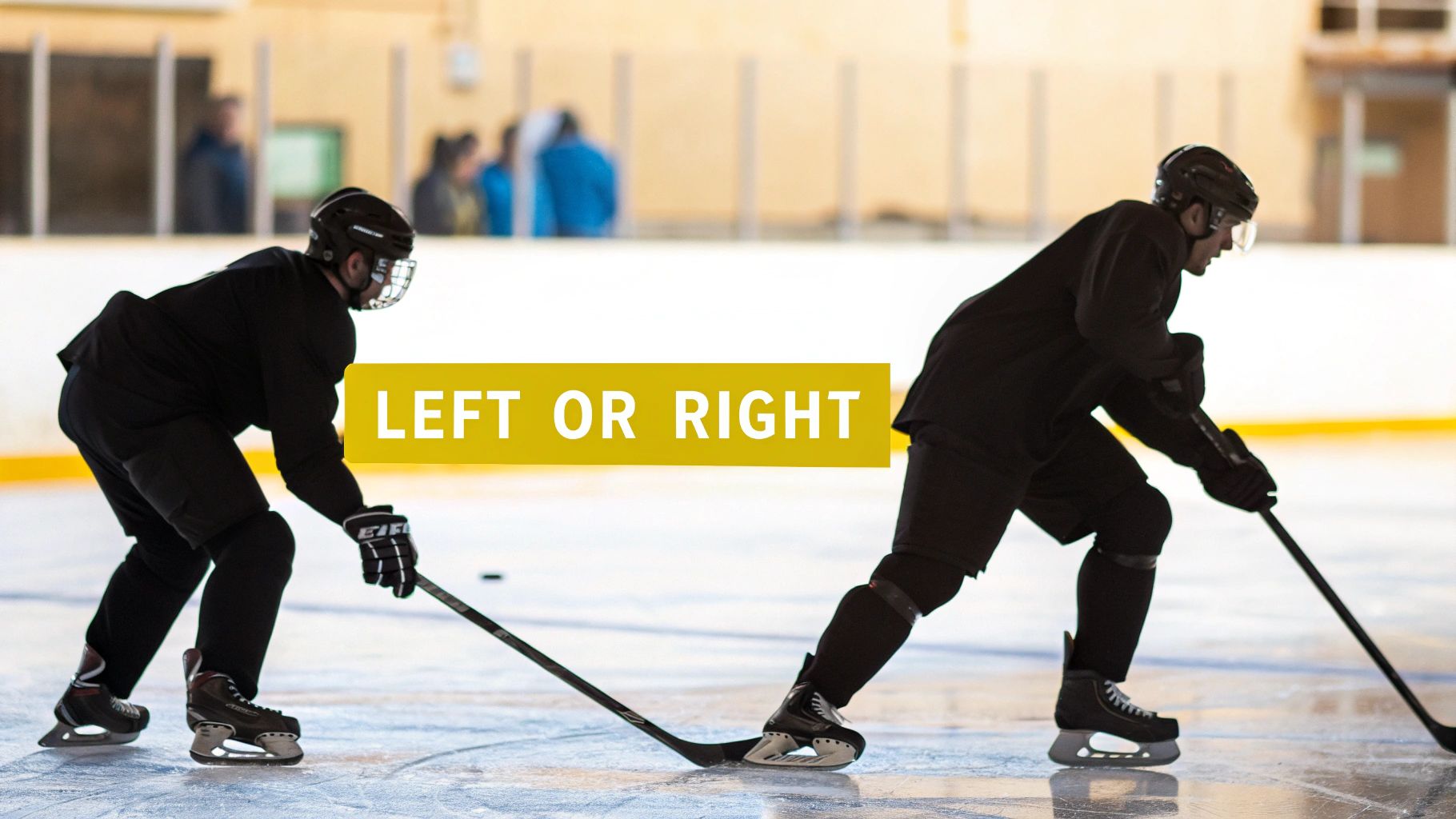
A player’s stance is their fingerprint on the ice. It’s a dead giveaway to their playing style, a unique posture carved out from thousands of hours of practice. When you’re staring down a hockey player silhouette, the first thing to break down is their posture.
Just think about it. Some guys, like Sidney Crosby, are famous for that low, powerful stance. Sid’s almost always hunched over the puck, using his ridiculous leg strength and low centre of gravity to protect it. Then you’ve got explosive skaters like Nathan MacKinnon, who often looks more upright, coiled and ready to rocket up the ice. Learning to spot these basic differences is your ticket to a confident guess right off the hop.
Lefties vs. Righties: The Biggest Tell
Before you even get into playing styles, there’s one simple clue that will instantly chop your list of potential players in half: which way do they shoot? Figuring out if you’re looking at a lefty or a righty is easily the most powerful first move you can make in any hockey guessing game.
It’s surprisingly easy to spot. Look at their hands on the stick. The top hand is the key—if their right hand is higher up, they’re a left shot. If their left hand is on top, they’re a righty. Simple as that.
This isn’t a small detail; it’s a huge advantage, especially when you know the league’s makeup. For instance, a 93.87% of Canadian left-wingers shoot left. Knowing that little tidbit can lead to some seriously fast deductions. You can dive into the full analysis of NHL player handedness if you really want to geek out.
Identifying Signature Shot Releases
Beyond handedness, the way a player unloads the puck creates a silhouette all its own. Some players have shooting mechanics so iconic you can name them from the wind-up alone. For trivia hounds, these signature releases are pure gold.
Think of Alex Ovechkin setting up for a one-timer from his "office" at the top of the circle. That distinct leg kick and massive wind-up create a shape that no one else in the league can replicate. Or how about Auston Matthews and his deceptive drag-and-snap release? It's a quick, coiled motion that looks totally different from a classic slapshot.
Pro Tip: Start watching game highlights with a new focus. Zero in on a player’s body and stick position just before they let a shot fly. Before you know it, you’ll be spotting the subtle tells that separate a pure sniper’s release from a d-man's bomb from the point.
Building a mental library of these signature shots is a secret weapon. Here are a few more to get you started:
- Steven Stamkos: His one-timer from the left circle is legendary. He drops to one knee, creating a super low and powerful silhouette.
- Patrik Laine: Known for his absolute cannon, Laine has a classic, picture-perfect release that’s all about generating maximum power.
- Connor Bedard: Keep an eye out for that signature toe-drag release that fools goalies left and right. It creates a unique shape as he pulls the puck in close.
Once you nail down stances and shots, you’ll be ready for even finer details. Combining these skills separates a lucky guess from an educated one. And hey, if you love picking out players from visual clues, you should check out our NHIdle Face Reveal game for another fun challenge.
Spotting Giveaways in Player Equipment
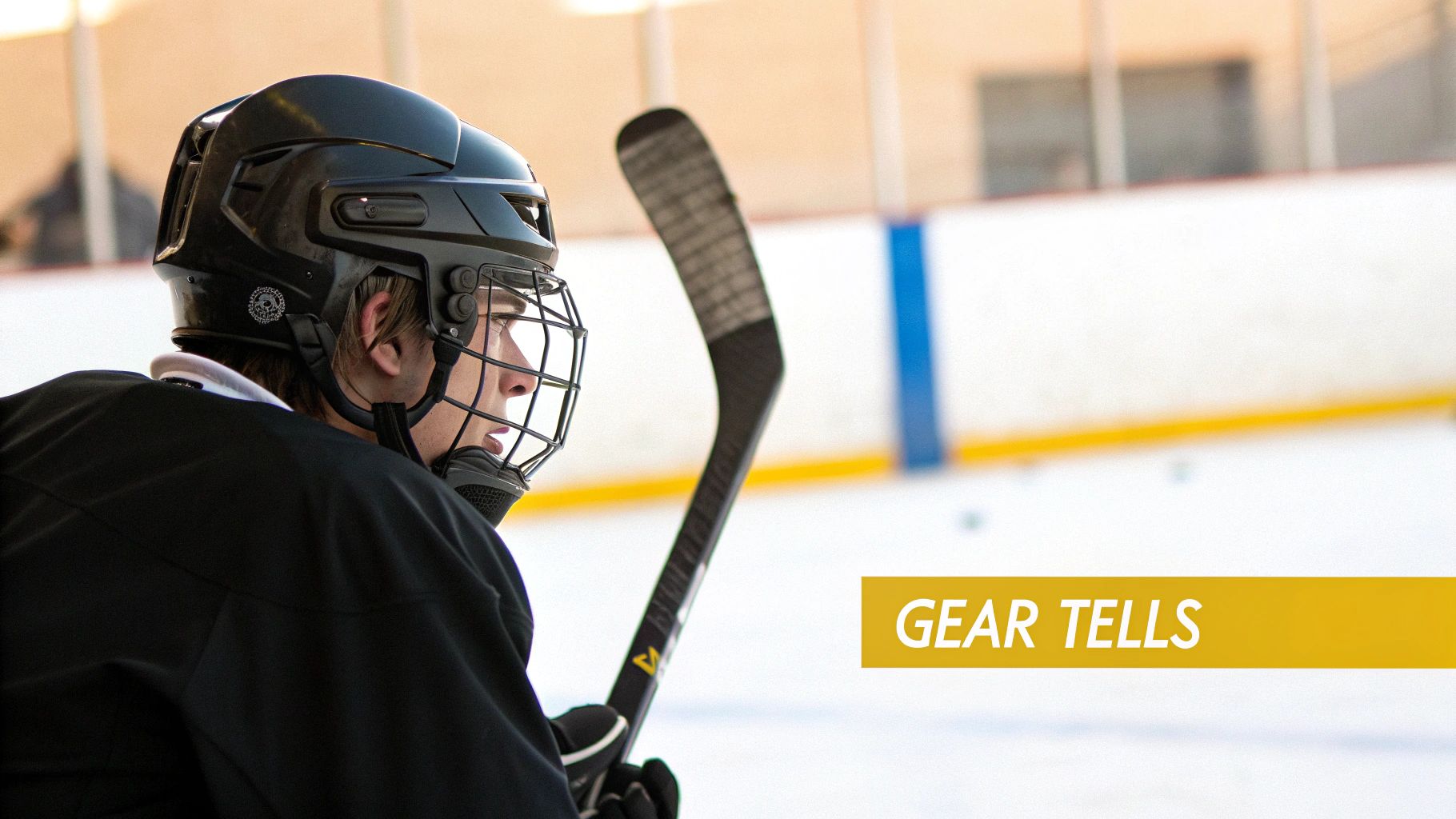
Sometimes, it’s not the stance or the shot—the gear is the player. Certain guys are legendary for their specific equipment choices, and those little details can be dead giveaways in a hockey player silhouette. Think of Alex Ovechkin’s iconic tinted visor or the unique cage worn by a few select players over the years.
Nailing these equipment-specific tells is a pro-level move that will make you a trivia legend. Seriously. It’s one thing to recognize a skating style, but being able to ID their helmet model from just a shadow? That’s next-level stuff. The outline of a helmet, the cut of a visor, or even the bulk of their shoulder pads can be the clue you need.
Helmets, Visors, and Cages
Let's start at the top. A player's bucket is often the biggest clue. Different brands have distinct shapes. A classic Bauer helmet has a completely different profile than a modern CCM, and if you're a real hockey historian, you can spot a vintage Jofa helmet from a mile away.
Visors are another gold mine. Is it a standard half-visor, or does it sit unusually high like some European players prefer? Is it tinted? Only a handful of players, most famously Ovi, have rocked a mirrored or tinted visor. If you spot that darkened shield, your list of suspects just got way shorter.
And don't forget the full cage or "bubble." While they’re rare in the pros unless a player is recovering from injury, some skaters have worn a full shield for long stretches, creating an unmistakable outline.
Twigs and Gloves
A player's stick and gloves can also offer subtle but powerful clues. Some players, like Zdeno Chara, were famous for using ridiculously long sticks that gave them insane reach. This creates a silhouette that looks almost out of proportion—a massive tell. Even the curve of the blade can be a hint; some guys use a massive curve for their dangles, while others prefer something much flatter.
Gloves can be another hint. Keep an eye out for players with extra-long or flared cuffs, a style popular with snipers who want more wrist mobility for a quick release. These small details add up, helping you distinguish between two players who might have a similar build.
Pro Tip: When you're watching games, start paying attention to equipment trends. Notice who's wearing what brand or using a unique setup. Building this mental database of gear is a fantastic strategy for getting faster at any hockey guessing game.
Learning to spot these equipment quirks is like adding another secret weapon to your hockey knowledge. You’ll start to see beyond the basic shape and begin recognizing the fine details that make each player’s silhouette totally unique. It’s the kind of know-how that separates the casual fan from the true hockey nerd.
Recognizing Player Physiques and Body Types
While today's game is all about speed and skill, you can't ignore the clues a player's build gives you in a hockey player silhouette. Some guys are just built differently, and that unique outline can be an instant giveaway. Learning to spot these physical tells is a massive piece of the trivia puzzle.
The most obvious examples are the outliers. Nobody is going to confuse Zdeno Chara’s massive 6-foot-9 frame with the compact, fire-hydrant build of someone like Brad Marchand. The real skill is telling the difference between players who look similar on paper. You could have two guys both listed at 6-foot-4, but their silhouettes will look totally different depending on how they carry themselves.
Power Forwards vs. Speedy Wingers
Think about a classic power forward. Their silhouette is all about brute strength and presence. They’re often built wider and thicker through the shoulders and legs, which creates a blocky, imposing shape. Picture players like Tom Wilson or a prime Milan Lucic—their outlines just scream power.
Now, contrast that with the smaller, speedy wingers. Guys like Brayden Point or Johnny Gaudreau have a much lower centre of gravity and a more streamlined physique. Their silhouettes just look more agile and dynamic. When you can spot these body types, you're not just narrowing down the player; you're figuring out their entire style of play.
How Player Size Has Changed Through Eras
Here’s a pro tip: understanding how player physiques have evolved over NHL history gives you a serious advantage. Player size has shifted like crazy over the decades, and that can help you place a silhouette in a specific time period. For example, by the 2004-05 lockout, NHL skaters had hit their peak average height and weight. Since then, the trend has started to reverse as GMs put a premium on speed over pure size. You can see the evolution of NHL player size for yourself.
Key Insight: If you see a silhouette of a player who looks absolutely massive and bulky, there's a good chance they played during that "heavyweight" era of the late 90s and early 2000s. A leaner, more athletic-looking build might point to a more modern player.
This historical context is a game-changer. A silhouette from the 70s looks worlds apart from a modern one, not just because of the gear, but because the athletes themselves were built differently. Recognizing these era-specific body types is an advanced skill that will lead to some seriously impressive guesses.
When you start combining your knowledge of player builds with other clues, you create a powerful system for deduction. For more tips on sharpening your skills, you should check out our other hockey insights to get an edge in your next game. Spotting these physical traits adds another fantastic layer to your analysis.
Putting It All Together to Nail Your Guess
So, you've learned to scout the stance, analyze the gear, and size up the physique. Now it's time to bring it all home and go five-hole on your next guess. The real magic in games like NHLdle isn't just knowing one or two tricks; it's about weaving all those little clues together into a powerful process of elimination.
This is where you graduate from taking wild shots in the dark to thinking like a seasoned GM on draft day. You've got all the scouting reports right in front of you—the shot, gear preferences, and body type. By methodically stacking these clues, you can whittle down that massive pool of NHL players to just a couple of prime suspects in seconds.
Your Go-To Mental Checklist for Every Silhouette
Instead of getting overwhelmed by a new hockey player silhouette, run through this quick mental checklist. It's a simple, repeatable system that stops you from getting tunnel vision on a single detail. The more you use it, the faster and more accurate you'll become.
Here's what you should be asking yourself:
- Lefty or Righty? Always your first move. It immediately cuts the player pool in half.
- What's the Build? Are you looking at a towering presence like a shutdown d-man, or the smaller frame of a speedy winger?
- Any Gear Giveaways? Zoom in on that helmet shape, the style of visor, or any other distinctive equipment.
- What's Their Posture Saying? Do they have that low, powerful stance of a pure goal-scorer, or are they more upright and smooth on their skates?
- Is That a Signature Move? Does the pose look like a familiar slap shot, a slick deke, or even a legendary celly?
This decision tree gives you a great visual for that next step, breaking down player builds into some common categories you'll see on the ice.
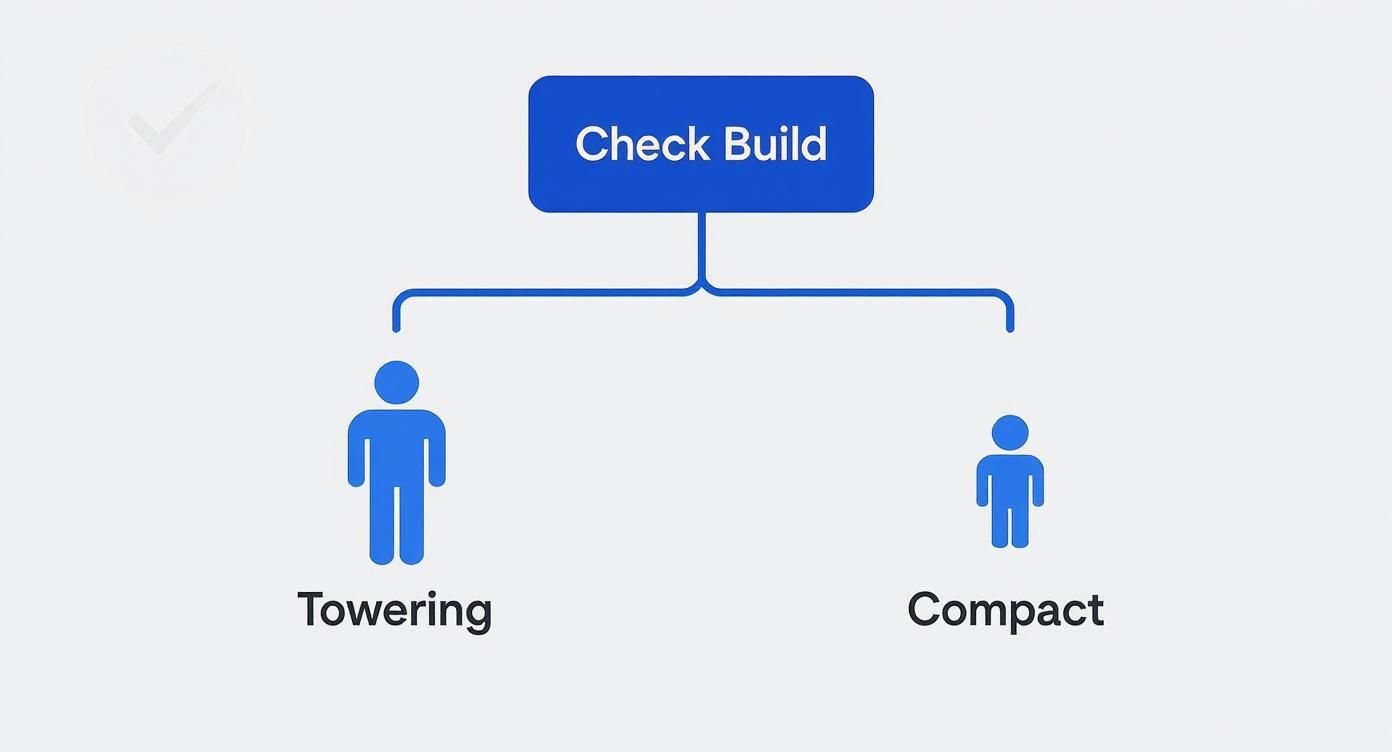
Starting with a player's general size right after you figure out their handedness is a killer one-two punch that helps you filter by position and playing style.
Connecting Clues to Nationality and Era
Once you've got the physical traits, you can add another slick layer to your deduction: nationality. As of the 2023-24 season, Canadian players still made up a whopping 41.2% of the league. Knowing that, and coupling it with the fact that many Canadian-born forwards are left-handed, gives you a serious statistical advantage. You can find more stats on NHL player nationalities at QuantHockey.com to dive deeper.
And don't forget about those legendary goal celebrations! The unique silhouette a player makes during their celly after a clutch goal can be a dead giveaway. Think of Teemu Selanne's "machine gun" celebration or Tiger Williams riding his stick down the ice—those are unforgettable outlines that scream not just the player, but the era they dominated.
Final Takeaway: The secret is to synthesize, not isolate. A tall player could be anyone. But a tall, right-shot player with a Bauer helmet and a posture that screams early 2000s hockey? Now you’re cooking with gas. You’ve got a much shorter list and a much better chance of nailing the guess.
If you're looking to put these skills to the test, a great way to practice is by using our NHL random player generator. See how quickly you can run through your new checklist and sharpen your eye for the details.
Got a few burning questions about how to nail that next silhouette guess? Let's jump into a quick Q&A to get you up to speed. This is your rapid-fire guide to solving the most common puzzles.
Think of this as your pre-game warmup before tackling another round of NHLdle. We'll cover the best places to start, the biggest mistakes to avoid, and how to get faster and more accurate with every guess.
What Is the Very First Clue to Look For?
Always, always, always start with their shooting hand. Seriously, this is the golden rule. Figuring out if a player is a righty or a lefty instantly cuts your list of potential players in half. Just look at their hands on the stick—the top hand tells you everything. It’s the most powerful first move you can make.
How Can I Get Better at Spotting Equipment?
The trick is to focus on the oddballs. Sure, most players use standard-issue gear, but some have distinctive setups that are dead giveaways. Keep an eye out for unique visors (like Ovi’s famous tinted shield), custom cages, or even funky helmet shapes during games.
Making a mental catalogue of these "gear outliers" will hand you some super easy wins.
What Are the Biggest Mistakes People Make?
The number one mistake is tunnel vision. It’s easy to get fixated on just one detail, like a player's height, while completely ignoring their stance or gear.
The best approach is to stack your clues. A tall player could be anyone, but a tall, right-shot player with a specific helmet? That’s a much smaller, more manageable puzzle to solve.
Try to combine at least three different clues—like handedness, overall build, and the era of their equipment. That’s how you go from a wild guess to a confident answer. You're building a case for your player.
Is Hockey History Important for Older Players?
It’s absolutely critical! Gear has changed so much over the decades, and being able to recognize those differences is a massive advantage. Older silhouettes will feature wildly different helmets (or none at all!), classic wood sticks, and pads that look nothing like today's gear.
Spotting the little details that place a player in a specific era is a huge clue.
- Helmets: Recognizing Wayne Gretzky's iconic Jofa helmet or those bucket-style lids from the 70s is an instant giveaway.
- Sticks: The straight blade on an old-school Northland or Sher-Wood stick is a world away from a modern composite twig with a massive curve.
- Pads: The streamlined gear of today looks completely different from the clunky, oversized pads that were all the rage in the 90s.
And if you're looking to generate some unique hockey player silhouettes for practice or your own creative projects, you can find some fantastic AI image prompt ideas to get you started.
Ready to put your silhouette-spotting skills to the ultimate test? Head over to SportsDle and challenge yourself with NHLdle, the original hockey guessing game that fans are raving about. See if you can identify today's mystery player!
Play Now at https://www.sportsdle.com