
How to Dominate NHL Trivia and Board Hockey Games
Discover the best board hockey game for you! This guide covers everything from setup and rules to pro tips and maintenance for your next family game night.
Alright, let's talk tabletop hockey. If you're the kind of fan who lives for NHL trivia, player guessing games like NHLdle, and heated debates about the greatest of all time, you're in the right place. A board hockey game isn't just a toy; it's a miniature rink where your hockey knowledge and quick reflexes collide.
The classics are rod hockey (you probably know it as Stiga hockey), where you twist and slide rods to dangle, pass, and shoot, and the legendary dome hockey (or "bubble hockey"), the arcade beast that puts the whole game under a clear dome. It's pure, fast-paced fun that brings the intensity of an NHL rivalry right into your rec room.
Dropping the Puck on a Timeless Classic
Long before video games let us build our dream teams, board hockey was the way to get in on the action. This is a hands-on experience that captures the speed, strategy, and pure thrill of the sport we all love.
This is where legendary family rivalries are born. It’s where you can finally pull off that perfect top-shelf snipe you've been dreaming about all season. It’s about feeling the game in your hands, not just mashing buttons on a controller.
You get to connect with the sport on a whole new level. Watching the pros is one thing, but actually controlling the play yourself—setting up a blistering one-timer or making a clutch glove save—is something else entirely. That physical connection is why board hockey has been a staple in basements for generations.
More Than Just a Game
And let's be real, while lighting the lamp is the ultimate goal, there's a ton of skill involved. You need quick reflexes, sharp hand-eye coordination, and some serious finesse to truly master the controls.
For younger fans, it’s an amazing way to develop those skills without even realizing it. Playing a board hockey game is one of many awesome activities to improve fine motor skills while having an absolute blast.
A Quick Look at the Different Rinks
To figure out which game is right for you, you need to know the main contenders. Each one offers a totally different experience on the "ice."
Finding Your Perfect Board Hockey Matchup
This table breaks down the big three categories to give you a quick snapshot of what to expect.
| Game Type | Core Mechanic | Best For |
|---|---|---|
| Rod/Table Hockey | Manually sliding and twisting rods | Fast-paced, arcade-style action and developing quick reflexes. |
| Dome/Bubble Hockey | Similar to rod hockey, but enclosed in a dome | A more durable, often coin-operated experience with an authentic arcade feel. |
| Board/Dice Games | Dice rolls, cards, and strategy charts | Simulating full seasons, stats-focused gameplay, and strategic team management. |
Whether you're after the frantic action of rod hockey or the cerebral, season-long simulation of a dice game, there's a version out there with your name on it.
A Piece of Hockey History
Board hockey is so much more than a game; it's woven right into the culture of the sport, especially in Canada. Ice hockey is our official winter sport, after all, with its roots stretching all the way back to 19th-century Montreal.
Today, with over 15 million of us following the NHL, that passion is stronger than ever. A board hockey game is a celebration of that shared heritage. That deep love for the game is what makes every showdown—whether on real ice or a plastic rink—feel like it truly matters.
Choosing Your All-Star Board Hockey Game
Ready to draft the next MVP for your games room? Picking out the perfect board hockey game is like a GM building a championship team. You've got to scout the talent, know your playing style, and keep an eye on the salary cap (your budget). Let's break down the scouting report.
Think of it this way: are you looking for a pure goal-scorer like Auston Matthews, or a legendary two-way playmaker like Sidney Crosby? Each type of game brings a different feel. Your main contenders are the classic rod hockey tables, the arcade-style dome hockey beasts, and some simpler tabletop versions.
The Heavy Hitters: Rod and Dome Hockey
Rod hockey is the tried-and-true classic, the one many of us grew up with, made famous by brands like Stiga. This is where you get hands-on, fast-paced action. You’re in total control, manipulating each player with a set of rods to pull off slick dangles, thread-the-needle passes, and fire off blistering snapshots. It demands sharp reflexes and even sharper strategy.
Then you have dome hockey, also known as bubble hockey. This is the heavyweight champion you've seen in arcades and sports bars. It's essentially rod hockey encased under a massive, clear dome. These models are built like a top-pairing defenceman—tough, durable, and ready to handle years of intense rivalries. Plus, they usually have electronic scoring and sound effects that make every goal feel like an OT winner.
This decision tree gives you a great visual of the paths you can take to find your ideal game.
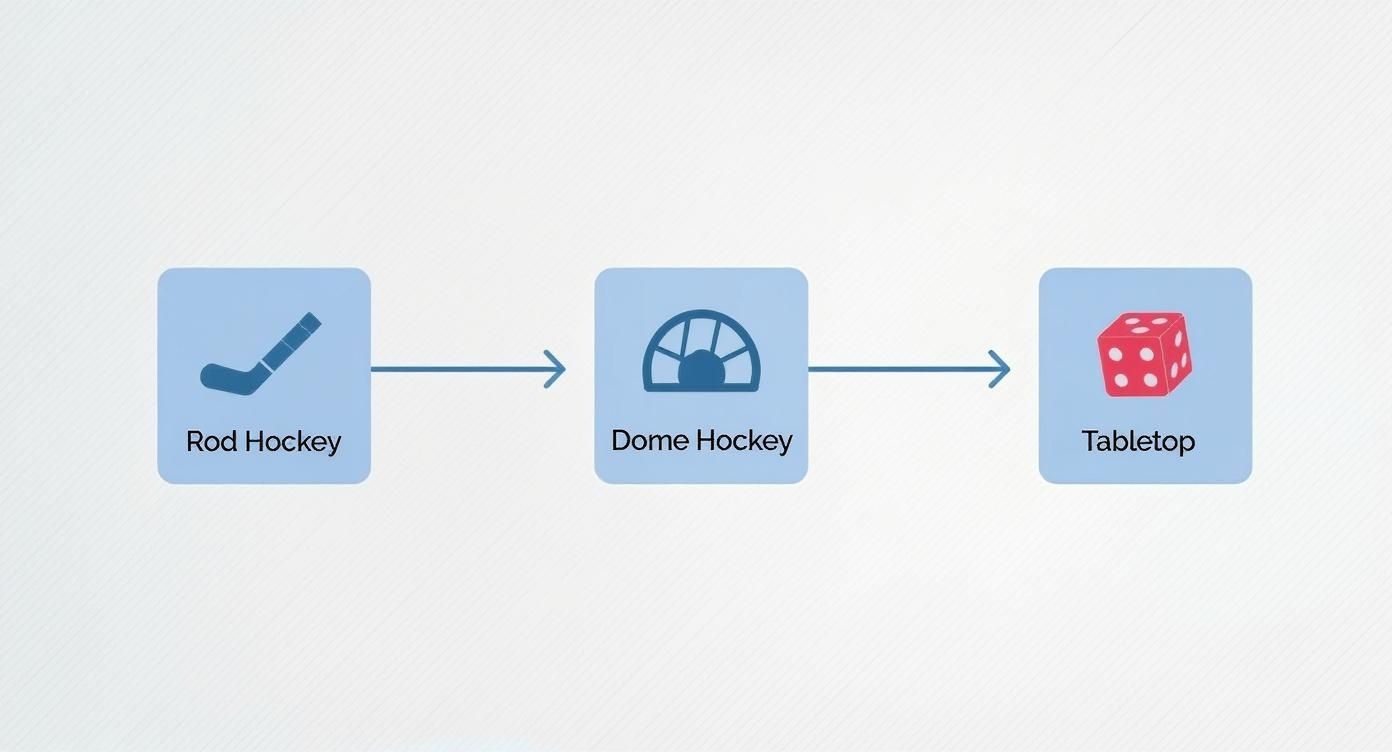
It’s a fantastic guide for figuring out which style of board hockey game lines up best with what you're looking for, whether it’s pure, fast-paced action or a deeper strategic challenge.
Finding the Right Fit for Your Rink
Once you know the style you're after, it's time to dig into the specs. Think of this like a GM sizing up a prospect at the draft combine.
Here are a few key things to consider:
- Materials and Durability: Is it a rugged wood-and-steel construction or a lighter plastic model? A solid wood game is built to last, but a plastic version might be more portable and easier on the wallet.
- Size and Space: Get out the measuring tape! A full-size dome hockey table is a serious piece of furniture. Make sure you have enough room for the game and for two players to work the rods without getting called for interference.
- Player Control: The last thing you want are sticky rods that kill a perfect scoring chance. The gearing mechanism should feel smooth and responsive, letting you pull off that slick spin-o-rama without a hitch.
A great board hockey game isn’t just about flashy features; it’s about quality construction. A perfectly level playing surface and buttery-smooth rods are non-negotiable for a fair, fast-paced game. It's what prevents questionable goals or the puck getting frustratingly stuck in the corners.
Rep Your Team Colours
Let's be honest, the game isn't complete without seeing your team's colours on the ice. Many top games come with officially licensed NHL teams, so you can stage that epic Leafs vs. Habs showdown or a Stanley Cup rematch between the Bolts and the Avs. Seeing those iconic sport team logos adds a whole new level of excitement to every face-off.
Setting Up Your Home Ice Advantage
So, you brought home a new board hockey game! Awesome. Now it's time to get it prepped for the opening face-off. Assembly is usually straightforward, but taking your time here will pay off with years of epic matchups. Let's get this beauty ready so you can start lighting the lamp.
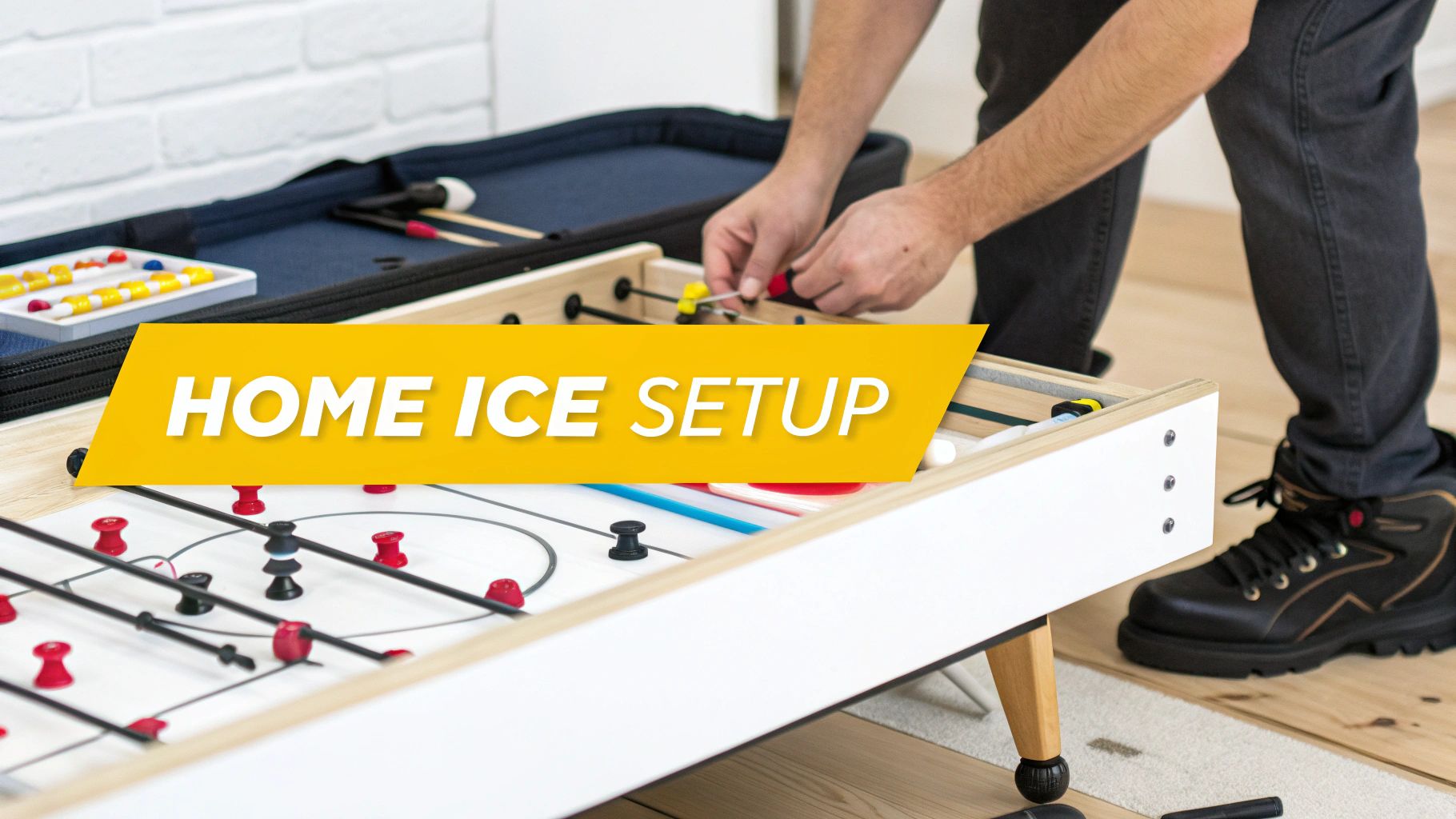
Most models follow the same basic playbook. You'll start by attaching the legs to the main rink frame. Get them sturdy! A wobbly table is the last thing you want when a game gets intense. Tighten all the screws properly.
With the legs on, it's time to lay down the playing surface. This "sheet of ice" needs to be perfectly flat so the puck glides true. Getting this right takes some care, a bit like when you follow a guide on how to install a pool table to ensure every shot is fair. A level surface is crucial for a real game.
Assembling Your Team
Rink built? Check. Next up, slide the control rods into place and attach your players. This is where it really comes to life. Each player figure clicks onto a gear mechanism on its rod, which lets them pivot and move along their track.
Make sure every player is seated firmly. A loose skater popping off mid-play is as frustrating as your star taking a dumb penalty in the final minute. Give every rod a quick slide and spin to make sure it moves smoothly—you don't want your top-line centre getting stuck on a breakaway.
Pro Tip: Before your first game, give each control rod a quick test. A tiny drop of silicone-based lubricant where the rods pass through the frame can make a massive difference. You'll get lightning-fast reactions for those clutch dekes and snapshots.
The Final Touches Before Puck Drop
Now for the fun stuff! Add the nets, the scorekeepers, and any cool puck ejectors. Once everything is in place, give the whole setup a final look.
Wipe down the playing surface to get rid of any dust or bits from the packaging. A smooth surface is everything for good puck movement. It’s a principle seen in the real deal when you look into the science behind official NHL hockey pucks and how they’re designed for peak performance.
With your rink assembled and players in position, you're all set. The only thing left is to grab an opponent, drop the puck, and let the games begin.
How to Play and Master the Rules
Alright, let's get right into it. Getting good at board hockey is like playing chess on ice—you need a feel for the controls and the ability to think one step ahead. The basics are simple: use the rods to move your players, pass the puck, and bury it in the back of the net.
Each rod controls a specific player or a pair of them. You push and pull to slide them up and down their track, and you twist the rod to make them pivot for a pass or a shot. The goal? Score more than the other guy. Easy, right?
Winning the Face-Off and Controlling Play
Every play kicks off at centre ice. When that puck drops, it’s a battle of reflexes. The secret is a quick, sharp twist of your centreman's rod to snap the puck back to your D. Winning that draw is huge—it gives you immediate control and lets you set up your attack.
Once you have possession, it’s all about smooth, deliberate moves. Don't just frantically jiggle the rods! Think like you're on a real power play. Make crisp passes from your defence up to your wingers, cycle the puck, and wait for a good opening instead of forcing a bad shot.
Going Top Cheese: Advanced Techniques
Ready to go from a fourth-line grinder to a pure sniper? It's time to add some high-skill moves to your game. These are the dangles that will have your opponent's goalie completely baffled.
- The One-Timer: This is your deadliest weapon. Pass the puck from one player (say, your centre) directly into the path of another (usually a winger) and time the shot just right. The "goalie" has zero time to react. Pure top cheese.
- The Spin-o-Rama: You can absolutely pull off a Denis Savard classic with your centreman. As you're carrying the puck toward the net, pull off a quick 360-degree spin to fake out the defender and open up a clean shooting lane. It's flashy, but man, is it effective.
- Playing Shutdown D: Defence wins championships. Use your defencemen to clog up passing lanes and poke the puck away from forwards trying to crash your net. Don't be afraid to park the bus in your own end to kill a penalty or survive a flurry of shots.
A popular house rule for a stuck puck is the "hand of god." If the puck gets wedged in a corner, the defending player gets to place it back in their own defensive corner to restart the action.
Common Rules and Scoring
A goal is a goal only when it fully crosses the line and stays in the net. If it bounces out, the puck is still live! Most people play in periods, often 5 minutes each, to keep the game moving.
To keep things fast and fun, rules like icing and offsides are usually thrown out. However, a "high-sticking" rule is common for when the puck flies off the rink—when that happens, the other player gets possession. Just agree on the house rules before you start, and you'll be set for an epic tabletop battle.
Keeping Your Game in Top Shape
A great board hockey game is like a star player—it needs the right care to perform at its peak. Think of yourself as the team's equipment manager. A little routine maintenance will keep your game in prime condition. A few simple steps will protect your investment and make sure the action is always fast and fair.
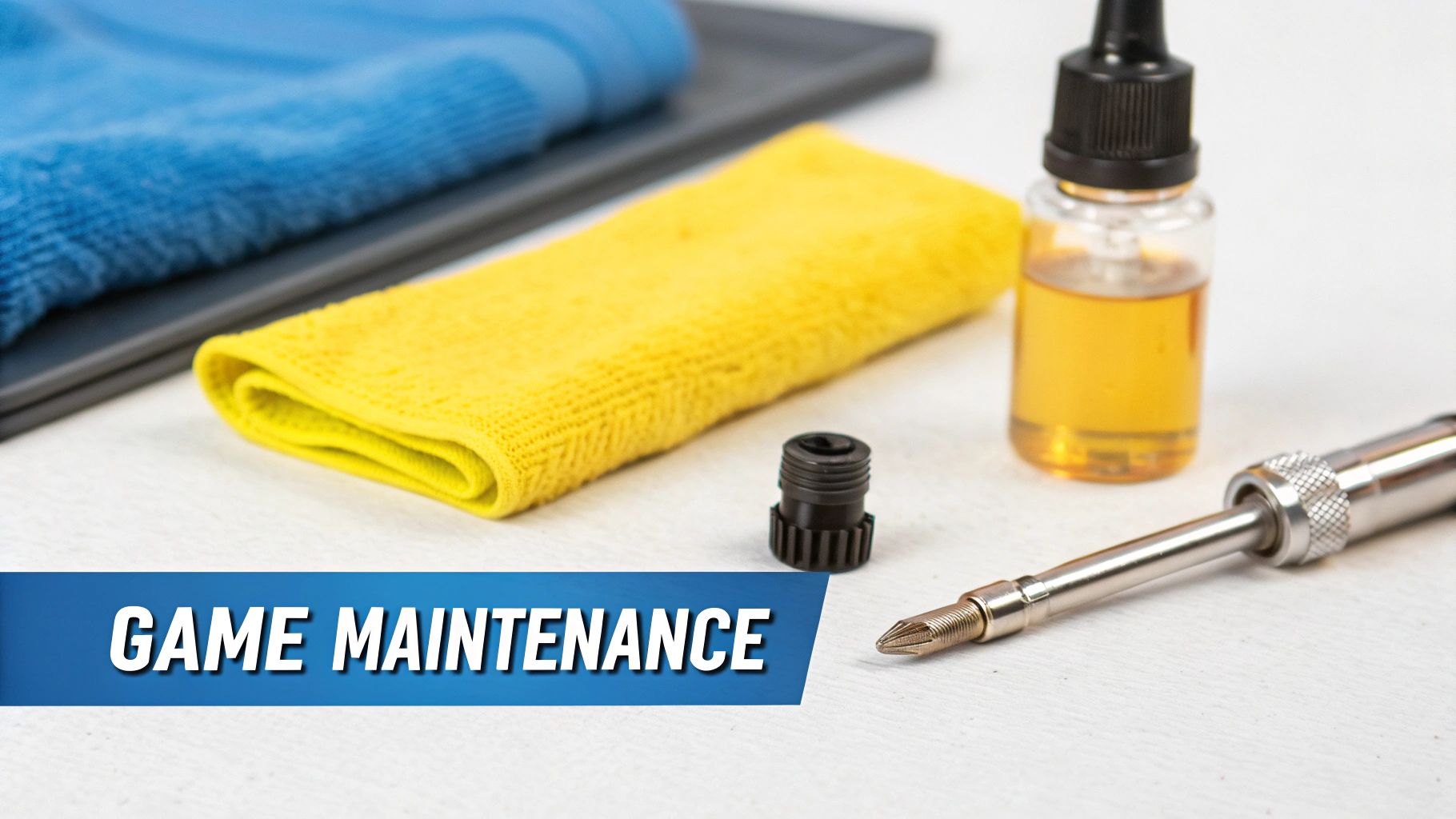
Your number one priority is the playing surface. Dust and grime are the enemy of speed. Grab a soft, dry microfibre cloth and give it a good wipe to clear away any debris.
For tougher spots, slightly dampen the cloth with water. But whatever you do, avoid harsh chemical cleaners or abrasive sponges! They can easily scratch the plastic surface or make the rink markings fade. A clean sheet of "ice" is essential for lightning-fast breakaways.
Smooth Moves and Quick Fixes
Next up, the control rods. Sticky or sluggish controls are the quickest way to kill the fun. For that buttery-smooth action, a quality silicone-based lubricant is your best friend.
Apply a tiny amount where the rods enter and exit the game's frame. Give the rods a few good pulls and pushes to spread the lubricant evenly. You’ll feel the difference in responsiveness almost immediately.
Even the best-maintained games run into issues. Think of these as minor equipment adjustments you'd make on the bench—quick fixes that get you right back in the action.
Here are a few common problems and how to solve them:
- A Player Pops Off: This happens to the best of us. Most players are press-fit onto the rod. Gently but firmly push the player back onto its peg until you feel it click. If it's a recurring problem, a tiny drop of super glue will create a permanent, game-winning bond.
- Sticking Gears: If a player isn't pivoting smoothly, a piece of debris might be caught in the gear mechanism. A quick blast from a can of compressed air can often blow out whatever is causing the jam.
- Wobbly Legs: Noticed the whole rink shaking? Check the screws or bolts holding the legs to the frame. All that frantic action can loosen them over time. A quick tighten-up will restore stability.
Family Fun or Fierce Competition? You Decide!
One of the best things about a board hockey game is how it can be two different things. One night, it's the center of a chaotic, laugh-filled family get-together. The next, it's a battleground for a serious tournament. It’s the ultimate chameleon of tabletop games.
For most of us, board hockey is synonymous with family fun. It's the perfect way to teach your little ones the basics, spark sibling rivalries, and let Grandpa dust off his old-school moves. This is where the game truly shines—when you make it your own.
Making it Your Own with House Rules
Sure, the official rulebook has its place, but the real magic happens with house rules. This is how you create traditions and keep the game exciting for everyone, regardless of age or skill.
Need a little inspiration? Here are a few ideas:
- The "No-Spin Zone": A classic for a reason! Banning the wild 360-degree spin-o-rama forces everyone to focus on passing and setting up plays. It's a great way to level the playing field.
- Bracketology 101: Grab a big piece of Bristol board and draw up a family tournament bracket. Nothing gets the competitive juices flowing like the chance to win bragging rights (or the last slice of pizza).
- The Mercy Rule: To prevent a blowout, introduce a mercy rule. If someone goes up by five goals, maybe the other player gets to control two rods at once to even things up.
At the end of the day, family game night isn't about the final score. It's about the shared laughs, celebrating a sweet goal, and passing that passion for hockey down to the next generation.
This welcoming spirit is something we're seeing in the real world of hockey, too. Look at the incredible growth in women's hockey! Back in 2022, Hockey Canada reported over 100,000 registered female players, a massive leap that shows how the community is expanding. You can learn more about the rise of women's hockey in Canada and see how the game continues to open its doors.
The World of Competitive Table Hockey
Now, you might be surprised to hear this, but there's a whole other side to table hockey—a seriously competitive one. All across the globe, official leagues and tournaments feature elite players going head-to-head with mind-blowing skill. These folks treat it like a real sport, complete with national championships and world rankings.
Watching one of these competitions is a completely different experience. The speed and strategy are off the charts, with players who have dedicated countless hours to perfecting their wrist shots and defensive formations. It's an amazing testament to how a simple game can blossom into a high-level skill competition.
Got Questions About Board Hockey? We've Got Answers.
Ready to drop the puck but still have a few questions? Perfect. Let's tackle some common questions that pop up when you bring a board hockey game home.
Think of this as your pre-game talk—everything you need to know to feel like a seasoned pro.
What's the Best Board Hockey Game for Younger Kids?
When shopping for the next generation of superstars, look for games built with them in mind. The best options are usually the simpler, legless tabletop models that are smaller and easier for kids to reach.
These junior-sized rinks are built tough to handle excited play. They also have more straightforward controls, so kids can jump right in. Always double-check the box for the recommended age range to make sure it's a safe fit.
How Do I Fix a Player That Keeps Popping Off?
Ah, the classic fallen player! It happens to every table. Most of the time, the players are just press-fit onto a little gear on the control rod. First, carefully pull the player piece off and look at the peg and the hole it sits in.
If it's just a bit loose, you can usually fix it for good with a tiny dab of super glue on the peg before pushing it back in. Just be careful not to let any glue drip down into the moving gear mechanism!
Can I Buy Different NHL Teams for My Game?
You bet! One of the coolest parts of owning a board hockey game is customizing it. For big brands like Stiga, it's pretty easy to find replacement team packs online. This is awesome if you want to switch things up or get your favourite team's official colours on the ice.
You can learn more fun facts like this in our other hockey insights articles. Your best bet is to check the manufacturer's website first, but plenty of specialty online shops stock them too.